
If you typed "zahedi dates supplier" into a search bar, you probably already know the date. What you need now is a way to judge the people selling it. Zahedi is a dry date, and a dry date raises different questions from a soft Medjool or a cold-chained Mazafati. The right questions are about texture, grading, pests and paperwork. This guide works through them using what the FAO and published research actually say, and it leaves out what they don't.
One point first. Malaysia has no commercial date-growing trade, so every Zahedi date sold here was imported. Whoever you buy from is either the importer or someone further down the chain from one.
Zahedi, Zahidi, Zahdi: one name, several spellings
You will see the name written three ways, and quotes and invoices may use any of them. The Iranian studies cited on this page write "Zahedi". Many English-language papers use "Zahidi". FAO's date-products bulletin, and a study that tested seed from Iraq, write "Zahdi". The bulletin calls Zahdi "the common variety in Iraq". A 2010 study of date seed varieties from Iran included "Zahedi" among its 14 samples (PubMed 24363720). The variety is grown well beyond those two countries. Published work has used Zahidi fruit grown in Israel (PubMed 23587027) and Zahidi dates obtained from a company in Alice Springs, Australia (PMC 12652178).
That spread is worth remembering. "Zahedi" on a price list tells you the variety. It does not tell you the country. Ask for the country of origin in writing, because labelling rules (covered below) expect it on the pack anyway.
Why a dry date changes the conversation
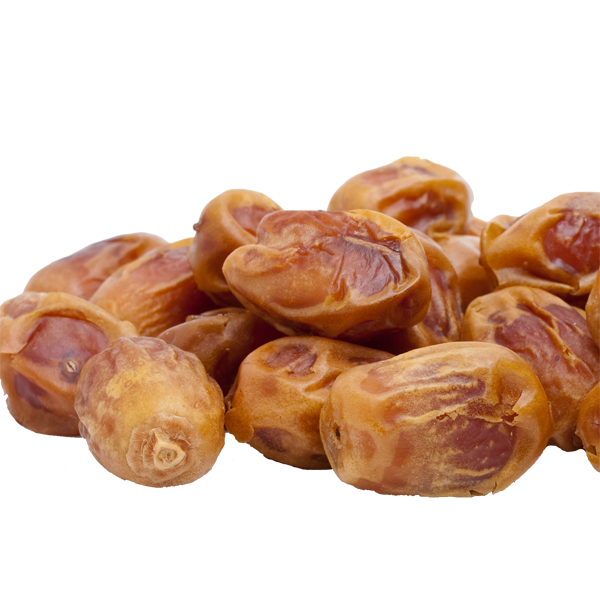
A 2024 review of dates as a global food resource, in its section on preservation, sorts dates into four groups: fresh, wet, semi-dry and dry. It puts Zahidi in the dry group, alongside Ameri, Halawi, Khadrawy and Thoory (PMC 11011438). FAO's chapter on harvesting and packinghouse management says most Zahidi is harvested "after the fruit has undergone the process of ripening and drying on the palms", which means it reaches the packhouse at the tamar stage.
Tamar is the stage that keeps. FAO calls tamar fruit "non-perishable", meaning micro-organisms cannot grow on it. It adds a caution: moisture uptake, and changes in colour and taste, still happen during storage. So a dry date is forgiving, not frozen in time. A supplier who can tell you when the stock was packed is giving you something useful.
| Group (PMC 11011438) | Varieties the review lists | What it means for storage |
|---|---|---|
| Fresh | Barhee | Eaten fresh; FAO counts every stage before tamar as perishable |
| Wet | Hayany | Matured by low-temperature storage or refrigeration |
| Semi-dry | Deglet Noor, Medjool | Sits between the soft and dry groups |
| Dry | Ameri, Halawi, Khadrawy, Thoory, Zahidi | Tamar-stage fruit, which FAO calls non-perishable |
Hard fruit and hydration
FAO names Zahidi, with Amri, as a variety that can come out "dry and hard" where it ripens in high heat and low humidity. Packhouses fix this with hydration, using water or steam at a controlled temperature to soften the fruit. FAO also warns that the softening can push moisture high enough to expose the fruit to microbial spoilage if the process is not managed. It is fair to ask a supplier whether the lot was hydrated, and whether it was packed soon afterwards or stored first.
Grades are the packer's own language
A/AA/AAA and Jumbo are not an international standard. They are each importer's own size sorting. FAO describes one packhouse system as an example. Grade A is perfect fruit, grade B has skin separation, grade C is "fruit for pitting and for industrial use", and grade D is rotten or damaged fruit. Grade A can then be sorted again by size into jumbo, large and medium. FAO stresses that "for each variety the standards are different" and that the client's requirements can set the criteria.
Zahidi also has a practical advantage on the sorting line. FAO lists it among the varieties, with Amri, Deglet Nour and Hayany, that can be sized by machine on a diverging roller sizer. Even so, a grade name on a quote means nothing until the seller tells you what it covers. Ask for size, defects allowed and whether the lot was sorted by machine or by hand.
Formats you can ask for
FAO says tamar-stage fruit is used for year-round eating and for products such as cakes, sauces, granule components and date honey. FAO describes four formats worth knowing.
Whole dates need no explanation. Pitted dates have the seed taken out by hand or by machine. FAO notes that machine pitting can leave some seeds behind, and when it does a warning must go on the pack. Pitted pressed dates are pressed into a mould and vacuum packed, and FAO calls them a useful basic product in both producing and importing countries. Date paste can be used as a cake filling. Its advantage, according to FAO, is a melting point above baking temperature, so the filling does not run out of the cake.
Further down the processing chain sits date syrup (dibs). The FAO products bulletin calls it "probably the most common derived date product". If you are buying for a factory, tell your Zahedi dates supplier which of these you need and ask for a sample of that format, not of the whole fruit.
Pests, fumigation and what "clean" should mean
Dry dates are stored for months, and storage brings insects. A 2023 laboratory study from Shahid Chamran University of Ahvaz in Iran tested the Indian meal moth, a stored-food pest, on five date varieties. It found Zahedi and Halavi to be susceptible hosts, while Estemaran and Fersi were the most resistant (PubMed 37217169). That is a lab result, not a verdict on any one shipment. It does explain why storage questions matter more for this variety.
FAO's guidance is plain. Fruit meant for long storage must first be cleaned of eggs, pupae, larvae and adults by fumigation. Afterwards it must be kept where it cannot be re-infested, and fumigated stock should not share a store with unfumigated fruit. Standards differ on how many dead-insect defects they tolerate, but FAO says "in all cases there must be no live insects inside the package". FAO says methyl bromide is the substance most often used, and notes that it was placed under the Montreal Protocol in 1992 because of its damage to the ozone layer. It names phosphine as the principal alternative.
Paperwork and pack labels
FAO's export checklist says every shipment should travel with customs, payment and transport documents, plus a phytosanitary certificate stating that the fruit is healthy. It also says each consignment should be sampled to make sure the quality of the fruit has not changed. Pesticide residues are measured against limits in the Codex Alimentarius, which FAO and WHO publish.
For export packaging, FAO lists what should be printed on it: net weight, country of origin, grown and packed by (with an address), product and variety, and category. On the Malaysian side, the quarantine department MAQIS asks anyone registering as an importer, exporter or agent to complete its registration form before applying for a permit (MAQIS permit page). The page covers all regulated goods and does not single out dates.
Questions to put to a Zahedi dates supplier
| Ask this | Why it matters |
|---|---|
| Which country was this lot grown in? | The variety is grown in several countries, and the export label is expected to state origin |
| What does your grade name cover? | Grades are each packer's own sorting, and FAO says standards differ by variety |
| Was the lot hydrated? | FAO flags Zahidi as a variety that can come out dry and hard and need hydration |
| How and when was it fumigated? | FAO wants long-stored fruit cleaned of pests and kept from re-infestation |
| Can I see the phytosanitary certificate? | FAO lists it with the shipment documents |
| Pitted by hand or machine? | Machine pitting can leave seeds, and the pack should then carry a warning |
| Can I have a sample of this exact lot? | FAO advises sampling each consignment |
Before you commit to any Zahedi dates supplier, get the answers in writing. Treat a seller who cannot say where the fruit grew with caution.
Timing your order
Gulf and Middle-East dates are mostly harvested from late summer to autumn, roughly August to November, and new-season stock reaches Malaysia some weeks later. In Malaysia, demand peaks before and during Ramadan, with Hari Raya, weddings, kenduri and umrah gifts as other busy periods. FAO notes that tamar fruit is marketed throughout the year, sometimes more than a year after harvest, partly because Ramadan can fall close to harvest time. So the word "new" on a quote tells you less than a pack date and a storage history.
Other posts on the variety are listed on the blog.
Short answers
Is Zahedi the same as Zahidi?
Yes, they are spellings of one name. The Iranian studies cited here write Zahedi, while FAO and many English-language papers use Zahidi, and FAO's products bulletin writes Zahdi.
Does Zahedi need a cold chain?
It is harvested at the tamar stage, which FAO calls non-perishable. Colour, taste and moisture can still change in storage, and pests remain the main risk, so ask how the stock was kept.
What grade should a food manufacturer buy?
In FAO's example system, the grade meant for pitting and industrial use is grade C. A Zahedi dates supplier may use different names, so match the spec to your product rather than the label.
More about this site is on the About Us page and the contact page.